
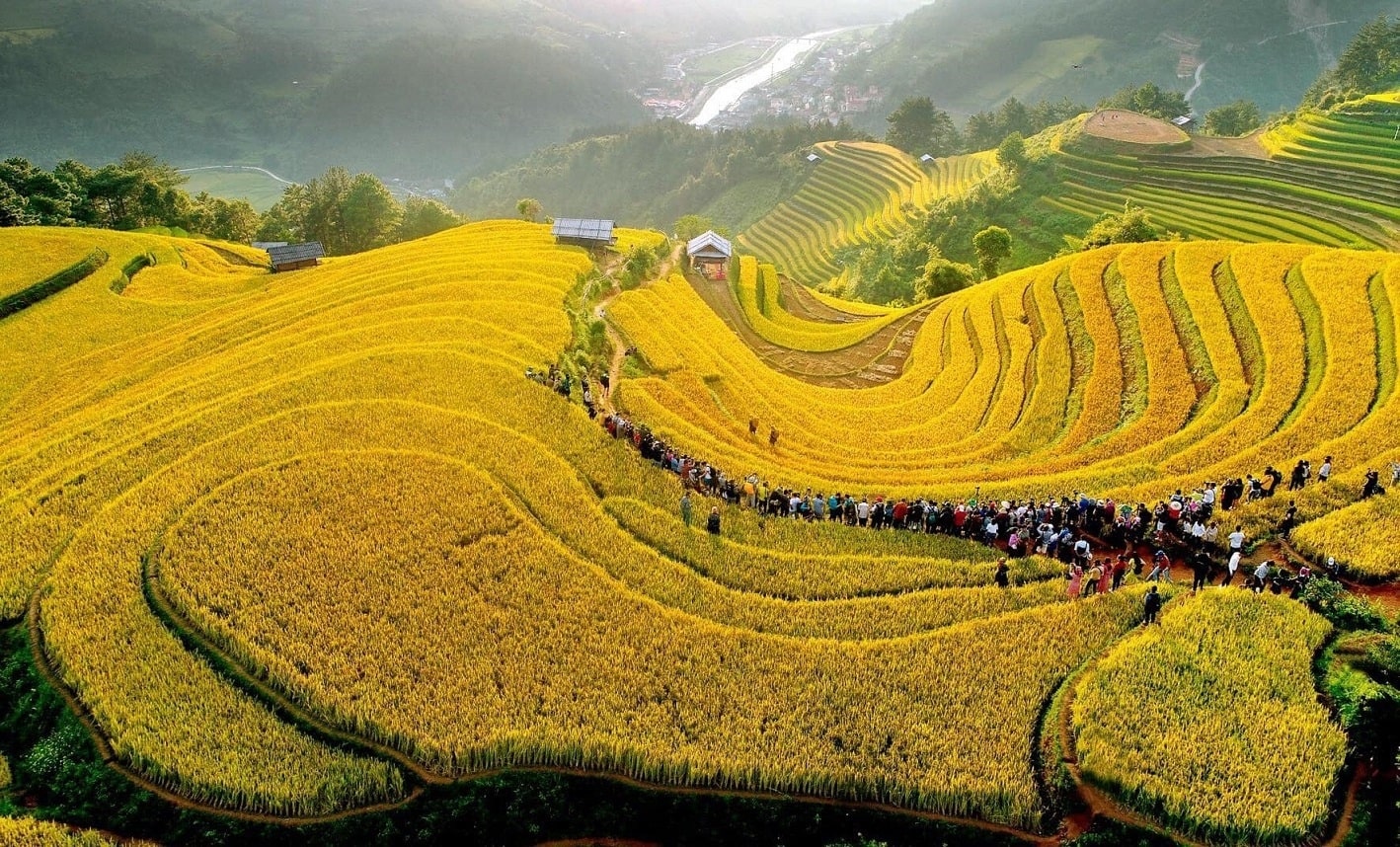
Mu Cang Chai is home to a large population of Mong ethnic people
Rich customs, practices, and folk beliefs
Yen Bai's Hmong people are incredibly wealthy and distinctive. The H'mong worship a system of guardian gods, including the deity of riches (Xu Cang), the god of doors (Bua Trungz), the god of the kitchen, and the god of house pillars (Bua Dangz), in addition to their ancestor worship.
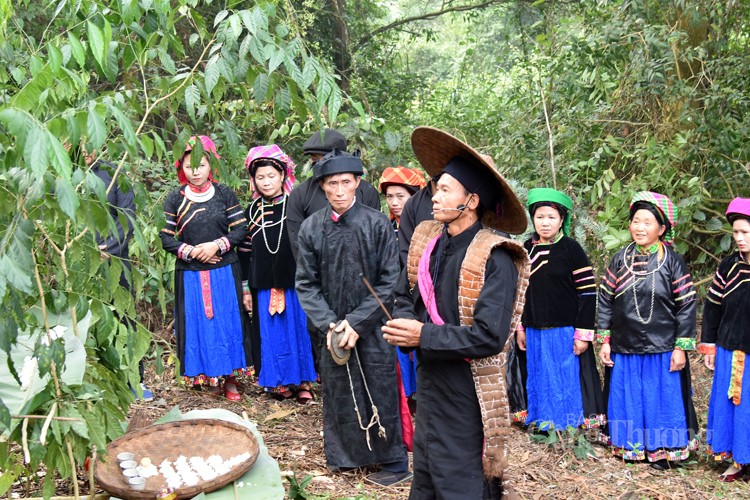
People of Na Hau commune (Van Yen district) go up the mountain to perform the forest worship ceremony
The ancestor worship of the H’mong is particularly significant, according to Dr. Hoang Tien Long, Director of the Yen Bai Provincial Museum. Although they don't have their own ancestral altars, the H'mong place an ancestor altar in front of the "xu cang" altar of the god of riches in the center of the home during ancestral worship ceremonies. The ancestral altar is taken down following the ritual.
From birth to death, a H'mong person undergoes a number of distinctive customs, including naming ceremonies, middle name ceremonies, wedding ceremonies, funerals, and more. Rituals of great importance are the naming of children, the funeral, and the hem. The naming ritual is rather straightforward: the kid's clan and family will arrange a soul-calling and naming ceremony three days after the infant is born. The funeral, which involves a number of intricate customs, demonstrates morals and appreciation between the living and the dead.
The H'mong people don't interact with other ethnic groups very much because of their remote living arrangements. The closed clans who govern the H'mong people of Yen Bai have their own set of customs and symbols that are widely accepted and closely adhered to. Traditions and rituals are preserved and transmitted within the H'mong clan. In Yen Bai, the Hmong people are divided into several clans, each of which has numerous brand inches and branches. Clan families frequently reside in close-knit communities.
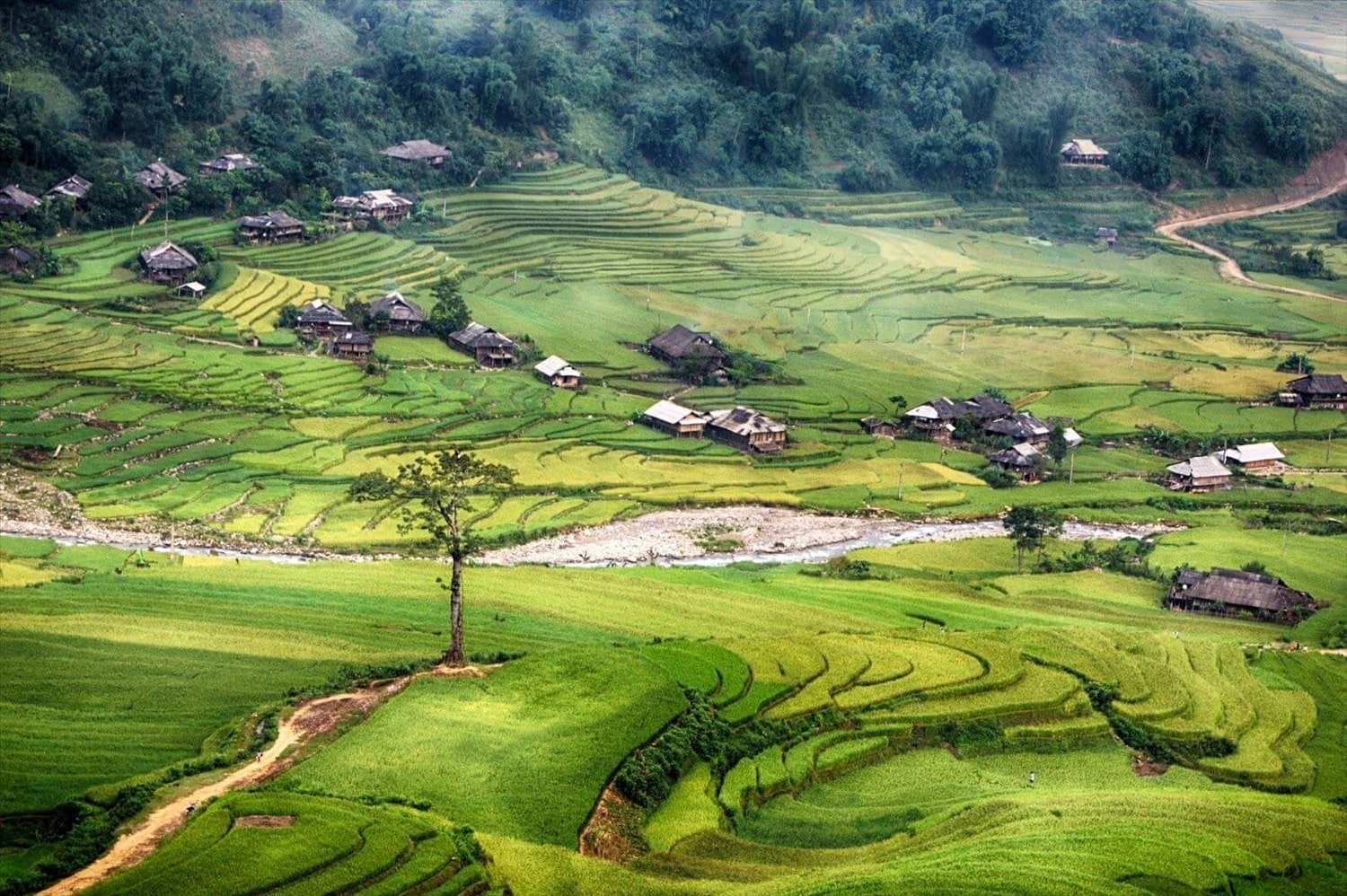
Lim Mong Village at the foot of Khau Pha Pass (Mu Cang Chai, Yen Bai)
Folk artist Vang A Vu, from Pang Cang hamlet in Suoi Giang commune in Van Chan district (Yen Bai), claims that the H'mong clan is extremely cohesive and includes all members of the same surname, no matter where they live. People from neighboring provinces with the same last name can be accepted as brothers by the H'mong in Yen Bai. Once they have accepted one another, people with the same last name are regarded as blood brothers and sisters and are not permitted to be married.
In addition to their intangible culture, the H’mong people of Yen Bai have highly distinctive physical cultural practices, including traditional vocations, home architecture, and food. According to Nguyen Manh Hung, a folk researcher and the head of the Yen Bai Provincial Folk Literature Association, the H'mong people of Yen Bai are well-known for their high-tech blacksmithing abilities, which include forging knives, hoes, casting plowshares, women's jewelry, and casting horse cowbells, bells, etc. Additionally, the locals weave exquisite and complex domestic goods from wood, such as bamboo and rattan.
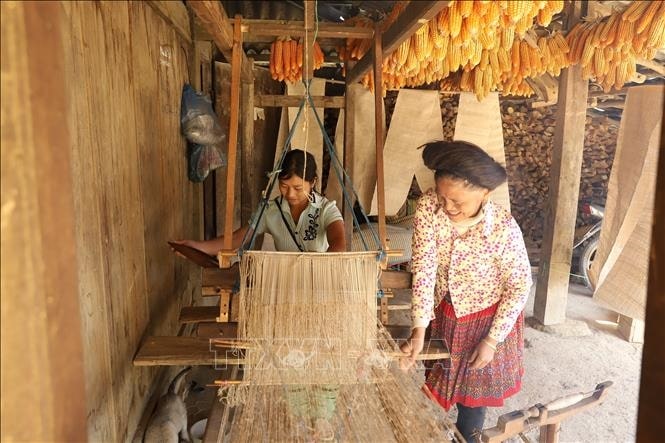
Passing on the brocade weaving craft is a mandatory custom for mature Mong women to pass on to young people
One of the oldest and most distinctive aspects of the Mong people's culture in Yen Bai is brocade weaving. The cloth is entirely handcrafted using a number of intricate procedures and is woven from flax fibers. The H'mong people believe that this cloth must be used to make formal costumes for both men and women, particularly those for the deceased. As a result, moms or grandmothers teach H'mong women how to weave from an early age.
Going to the market, particularly the vibrant brocade markets at the end of the year, is another significant habit of the H'mong people in Yen Bai. Tet is frequently celebrated by the Hmong one month ahead of the Lunar New Year, and individuals from distant villages frequently arrive at the market early. For them, going to the market offers the chance to meet, date, mingle, and demonstrate their panpipe dancing abilities in addition to selling goods from the mountains and woods and purchasing essentials for their families. In the highlands of Yen Bai, the H'mong people have long made market visits a lovely part of their culture.
Festivals associated with folk art
In Yen Bai, the Mong people's way of life is inextricably related to their yearly community festivals, folk songs, folk dances, and musical instruments. The Tau Su Festival is held in honor of the H’mong people's traditional New Year, the village community's Nao Xam Festival, which is held on the Day of the first lunar month each year, the New Year Forest Festival, which is held on January 28 every year, the New Rice Offering Ceremony, and the Gau Tao Festival are among the H'mong people's annual celebrations.
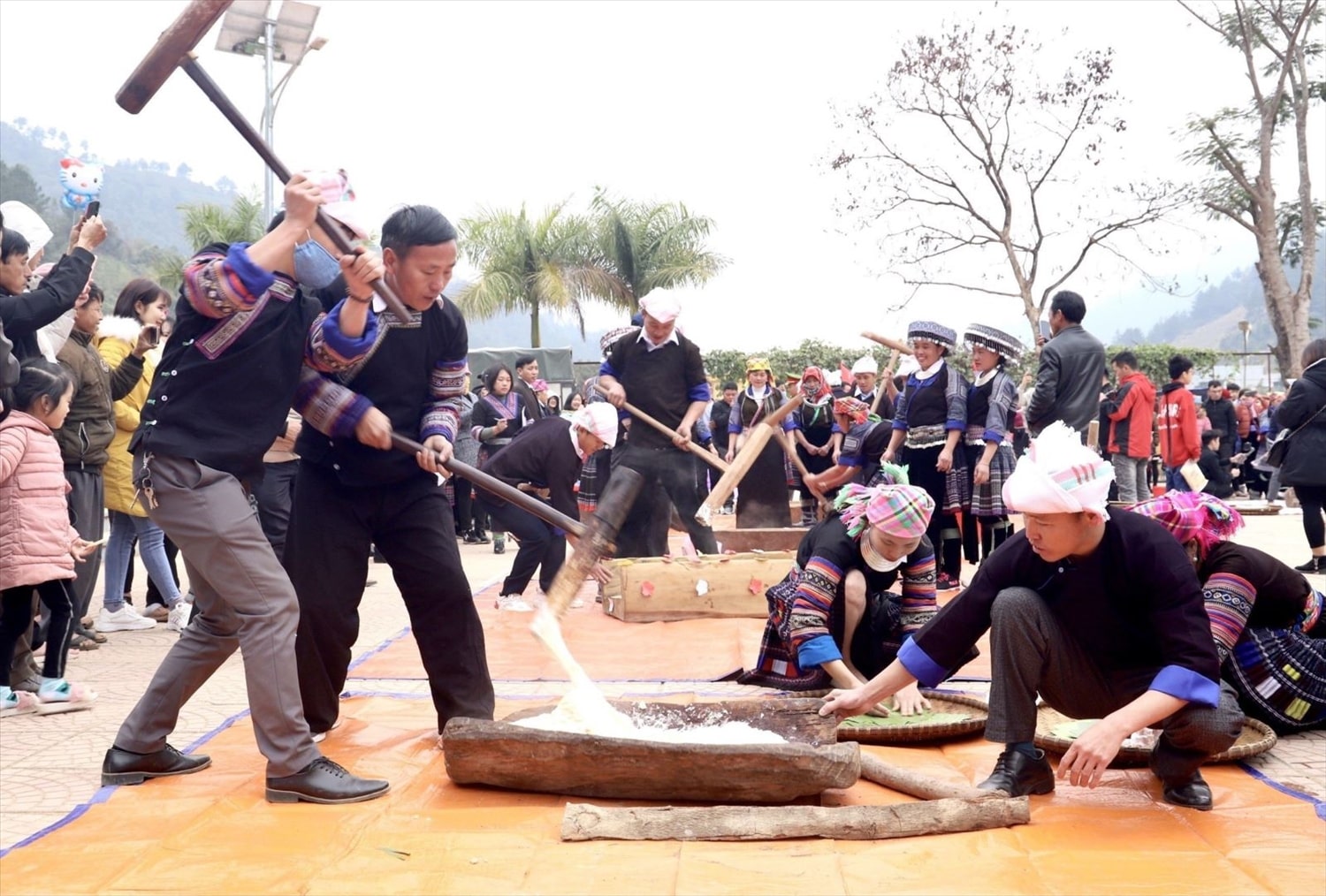
Rice cake pounding competition in the spring festival of the Mong people
Gau Tao is the most significant holiday for the H’mong people in Yen Bai, according to Mr. Ly Kim Khoa, Deputy Director of the Yen Bai Provincial Museum. Its goal is for homeowners to pray for children and to connect with the community to pray for peace, prosperity, and excellent crops. In addition to wine invites and captivating and enticing folk tunes, the Gau Tao Festival also features the performance of Mong flute dance. The New Rice Offering ritual is equally significant. The H’mong people perform this ritual to give thanks to heaven and earth and their ancestors for the fine weather, the avoidance of diseases, the abundant harvest, the year of abundance, and everyone's good health.
People sing folk songs and dance with the Khen in the spring, particularly during traditional weddings or the Hmong New Year. Numerous folk songs, including lullabies, antiphonal songs, riddle songs, solution songs, folk dances, etc., depict the struggle to overcome nature, work, and the desire for a wealthy and happy existence. The most unique kind of singing is called "Than chu" singing, or "Gau phenh" singing, in which girls and boys play Pa Pao while singing through a thread that is attached to two bamboo tubes that are wrapped with frog skin for the two of them.
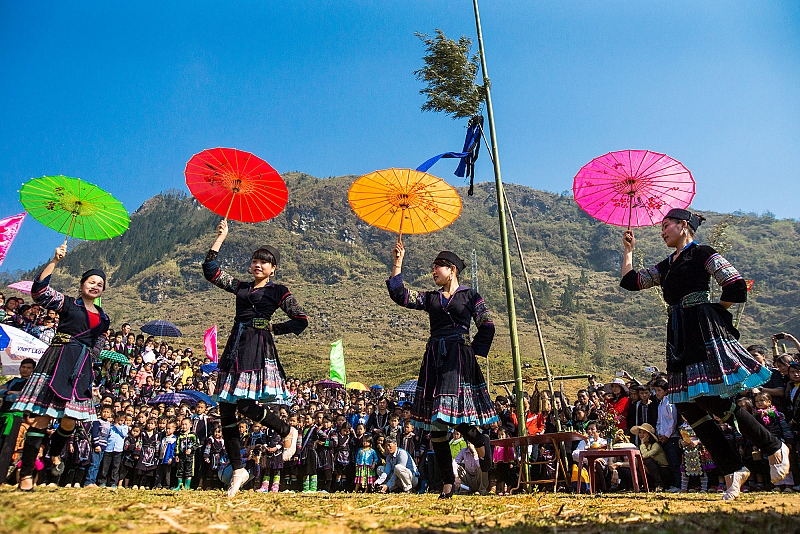
H’mong men and women sing Gau Phenh
During Tet and the Spring Festival, Gau Phenh singing is frequently performed. This type of love singing has a catchy, sentimental melody, a wealth of traditions, and clever, loving lyrics. The H'mong people in the highlands of Tram Tau and Mu Cang Chai, in particular, sing answers to questions and solutions during weddings. In Hmong weddings, the response singing consistently demonstrates the humility of the bride's and groom's family. The opening song, departure song, wine invitation song, door opening song, key concealing song, riddle solving song, gift delivery song, antiphonal song, etc. are often among the sixteen songs that are played during a Hmong wedding.