
1. History
The Han people drove the Hmong and Dao ethnic groups from the Chinese territory of San Miao between 4,000 and 5,000 years ago. After that, they endured migrations and warfare for millennia. They started migrating to Southeast Asia in the late 17th and early 18th century.
White Hmong, Black Hmong, Green Hmong, and Flower Hmong are the four subgroups of the Hmong in Vietnam that are distinguished by their languages, colors, and clothing features.
2. Population
As of April 1, 2019, there were 1,393,547 Hmong in Vietnam, according to the 2019 Survey of 54 Ethnic Minorities, which was conducted by the General Statistics Office and the Committee for Ethnic Minority Affairs.
3. Language
The Hmong ethnic language belongs to the Hmong-Dao language family.
4. Geographical distribution
The provinces of Ha Giang, Son La, Dien Bien, Lao Cai, Lai Chau, Yen Bai, Thanh Hoa, Nghe An, Dak Lak, and Dak Nong are home to the majority of Hmong people. Additionally, the H'mong have moved to several other provinces, including Bac Kan, Lam Dong, and Cao Bang.
5. Main features
Housing options include mud walls, timber homes with thatched roofs, and homes raised on stilts. Usually, the home has two to three doors, three compartments, and two lean-tos. In the center section of the home is an altar.
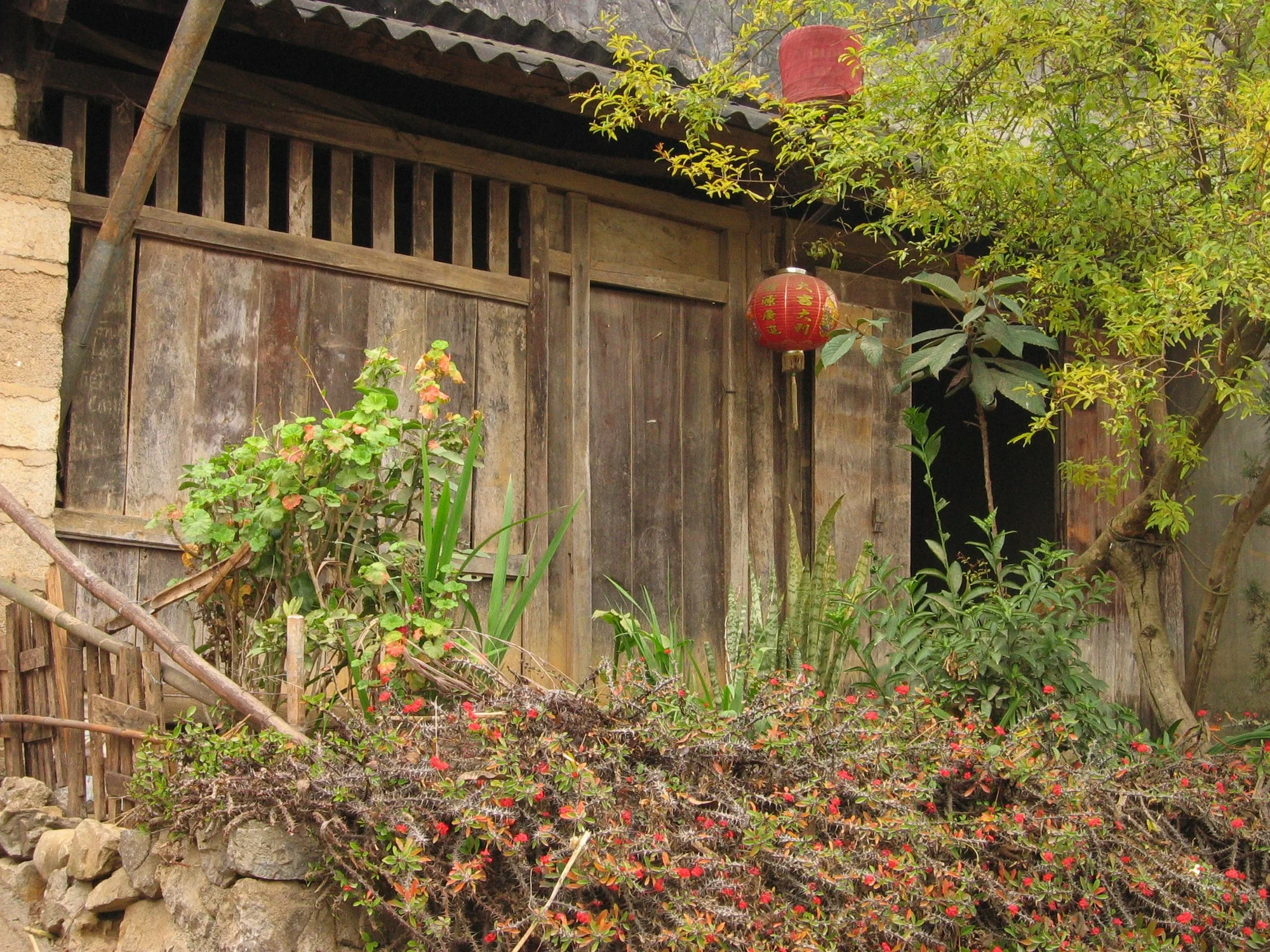
A Hmong house with earthen walls and a stone fence in Dong Van District, Ha Giang Province
In the rocky mountainous areas, each house has a separate campus separated from each other by 2m-high stone walls.
- Family structure: Patriarchal.
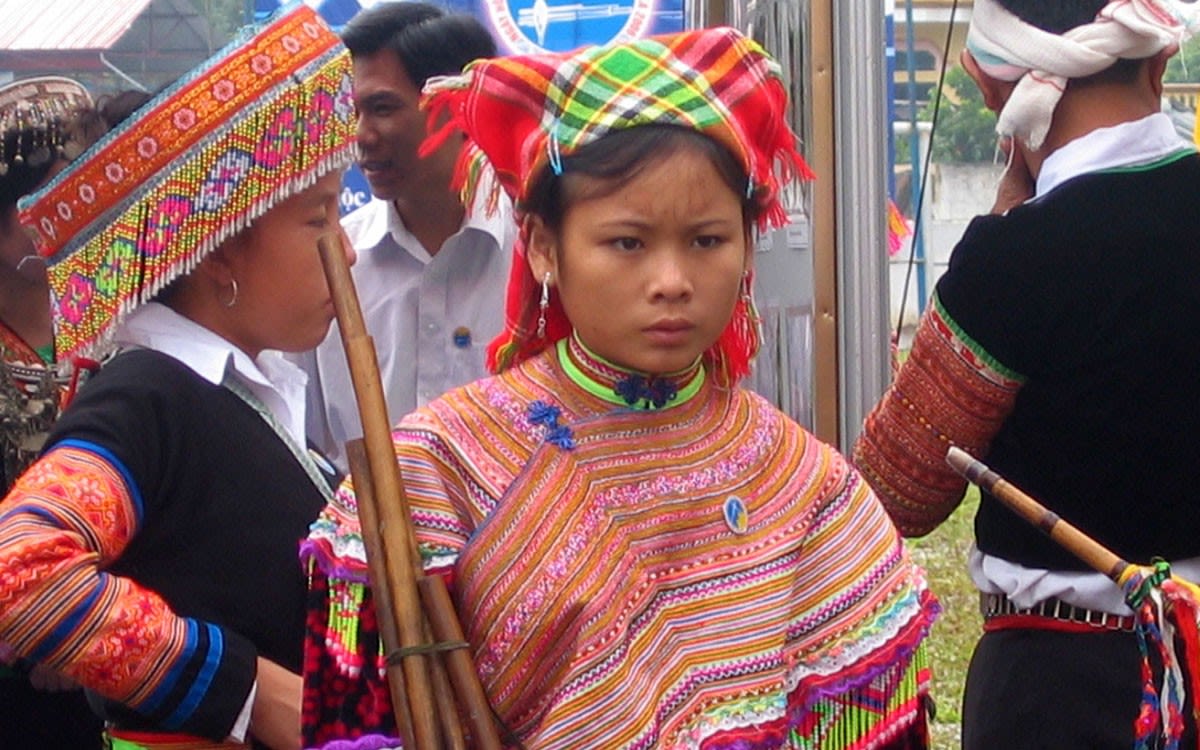
Hmong ethnic girls in Moc Chau District, Son La Province
- Traditional costumes: The costumes of the Hmong are very colorful and diverse.
White Hmong women weave linen and cultivate flax. They dress in white skirts with embroidered sleeves and V-necklines. They cover their heads with wide-brimmed scarves and shave a portion of their hair.
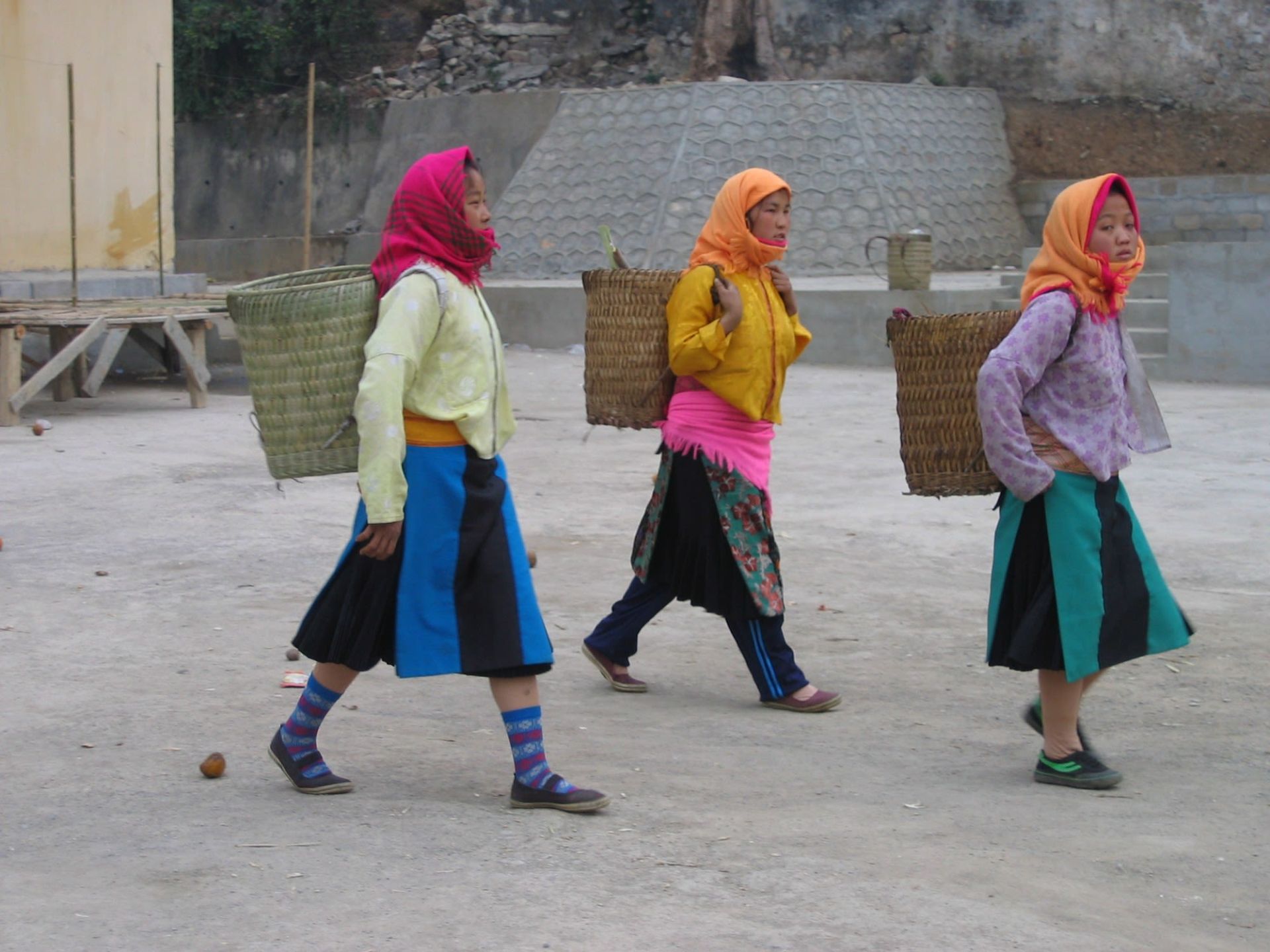
Hmong ethnic women go shopping at Dong Van Market, Ha Giang Province
The Flower Hmong ladies dress in indigo skirts with beeswax-printed or embroidered designs. Ice is embroidered and colored across the chest and shoulders of their tank. Their hair is long and is braided using a wig.
Black Hmong ladies dress in V-necked shirts and skirts made of indigo cloth with beeswax designs painted on them.
Women from the Green Hmong wear tube skirts. Married Green Hmong women wear a scarf outside and tie their hair up in a chignon or bun on top of their head with a little bone or animal hoof comb. Pie-colored fabric or embroidered designs in the forms of snails, squares, ovals, and crosses adorn their garments.
Men: Long pants, short blouses, black clothing, and a headscarf.
- Diet: "Men men" (maize cake), cakes made with corn flour, rice, corn wine, and rice wine, and "thang co" (hot pot with a combination of horse or goat meat and internal parts) are typical Hmong foods.
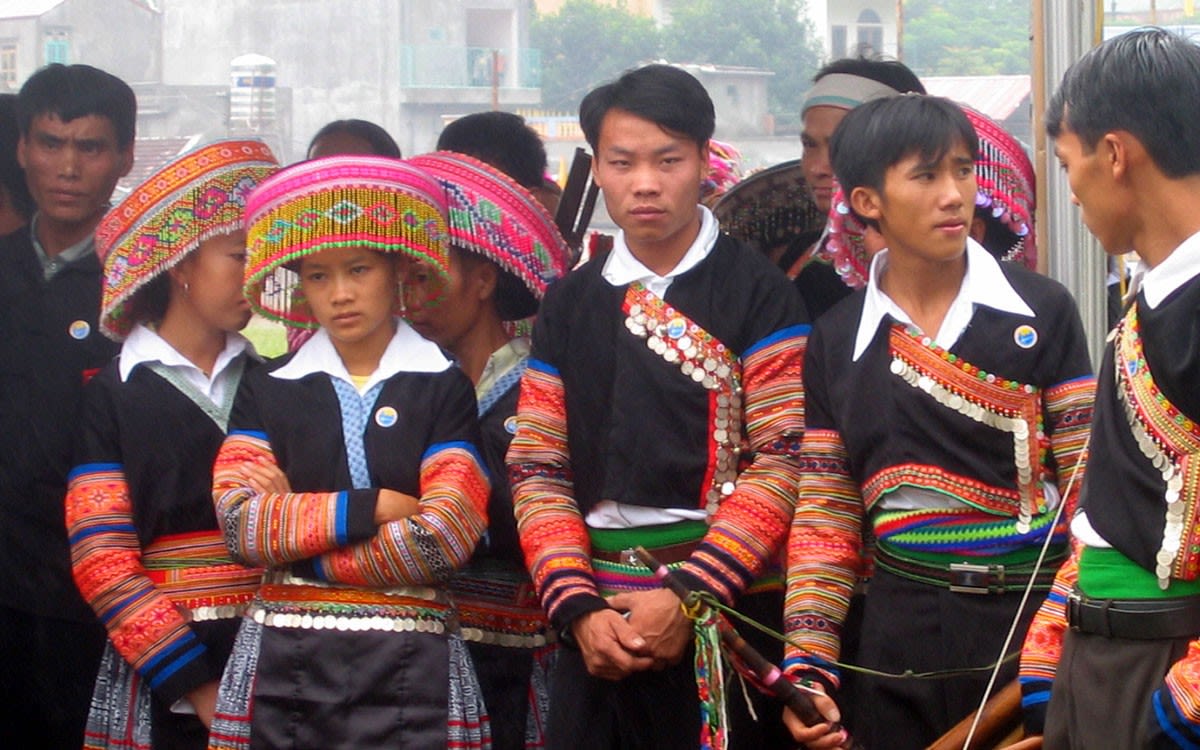
Hmong people at their traditional festival in Moc Chau District, Son La Province
The Hmong are also inspired by Buddhism, Taoism, and Confucianism, however, animism is mixed with these religions. The shaman serves as a bridge between the divine and human in the Hmong ethnic community. Every Hmong family worships the spirits of their kitchens, doors, and chambers in addition to their ancestors. Clan members revere the ghosts of their kin. The village's soil and guardian deities are worshipped at the communal level.
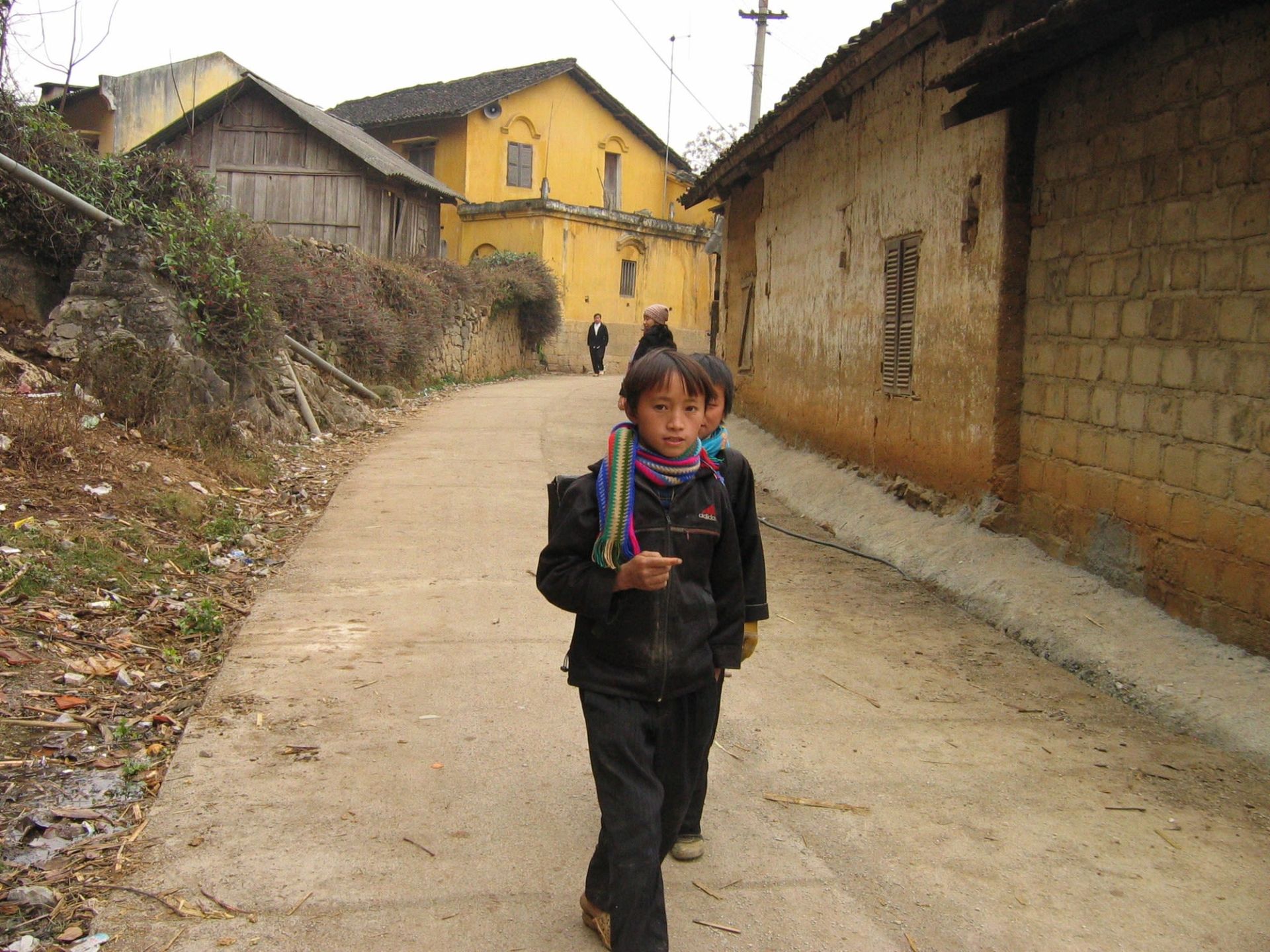
Hmong children in Dong Van District, Ha Giang Province